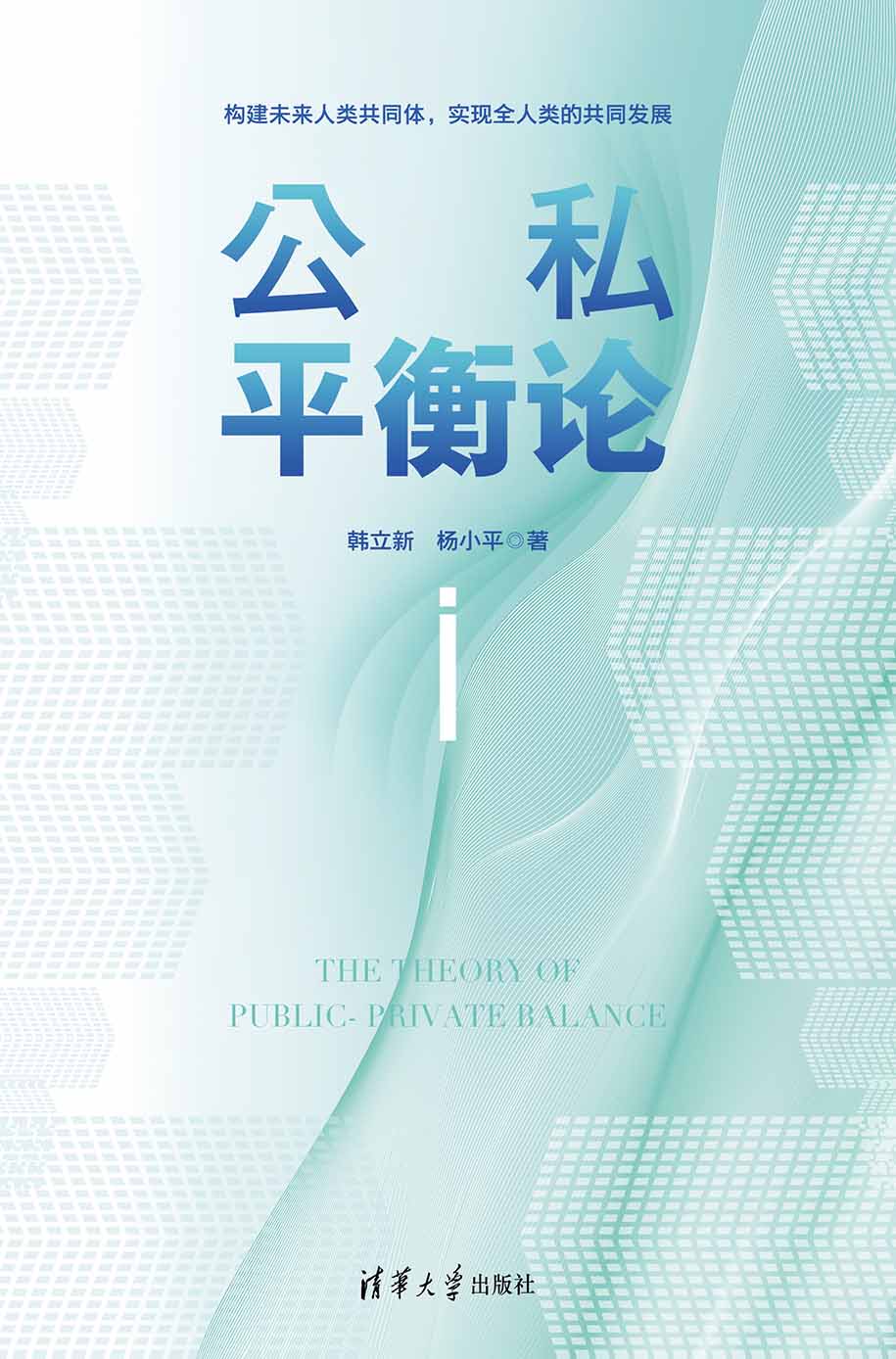
Pub date: January 1, 2026
ISBN: 9787302706335
Rights: All Rights Available
188 p.p.
Based on the thoughts of Adam Smith, Hegel and Marx, and on the basis of fully absorbing the Oriental Yin-Yang method, this book constructs a theoretical system centered on balanceism. This system can be divided into five levels: academic, theoretical, policy, methodological and practical (this book mainly involves the first three levels).
Balance Theory rests on the following four principles:
(1) From unity to balance: the balancing method; (2) From bipolarity to the middle ground: the principle of mediation; (3) A balance between individualism and holism; (4) The unity of ideals and reality.
Against this theoretical foundation, the book advances three principles to address public–private contradictions in the contemporary world: the principle of separation between the public and the private; the principle of unity and transformation between the public and the private, mediated by the system of objectified forms;and the principle of transformation from individual vice to collective virtue.
It also sets forth three policy objectives:
(1) At the domestic level, to establish a tripartite structure of "individual – civil society – state", and strike a balance between individual interests and national interests by strengthening the role of civil society. (2) At the international level, to build a tripartite structure of “nation-state – objectified forms themselves – world”, and use such intermediary systems as transnational capital, international trade, and the global market to regulate interstate conflicts and advance international relations toward greater balance and cooperation. (3) At the global level, to establish a future-oriented “global community”, or an “association of free individuals”.